Your Home as a Reflection of Your Human Design
Our homes hold energy – not just in the things we own, but in the way our space makes us feel. In Human Design, we often talk about alignment – following our Strategy, honoring our Authority, and moving through life in a way that feels true. But alignment isn’t something that lives only inside us…it’s also something we can see and feel in our environments.
When I first began the experiment of blending Human Design with decorating my home, I realized something powerful: my home wasn’t just where I lived – it was humbly mirroring my energy back to me. It helped me feel a sense of calm and serenity some days, and left me feeling stressed on others; all of this dictated by how I tended to it.
Your Energy and Your Environment
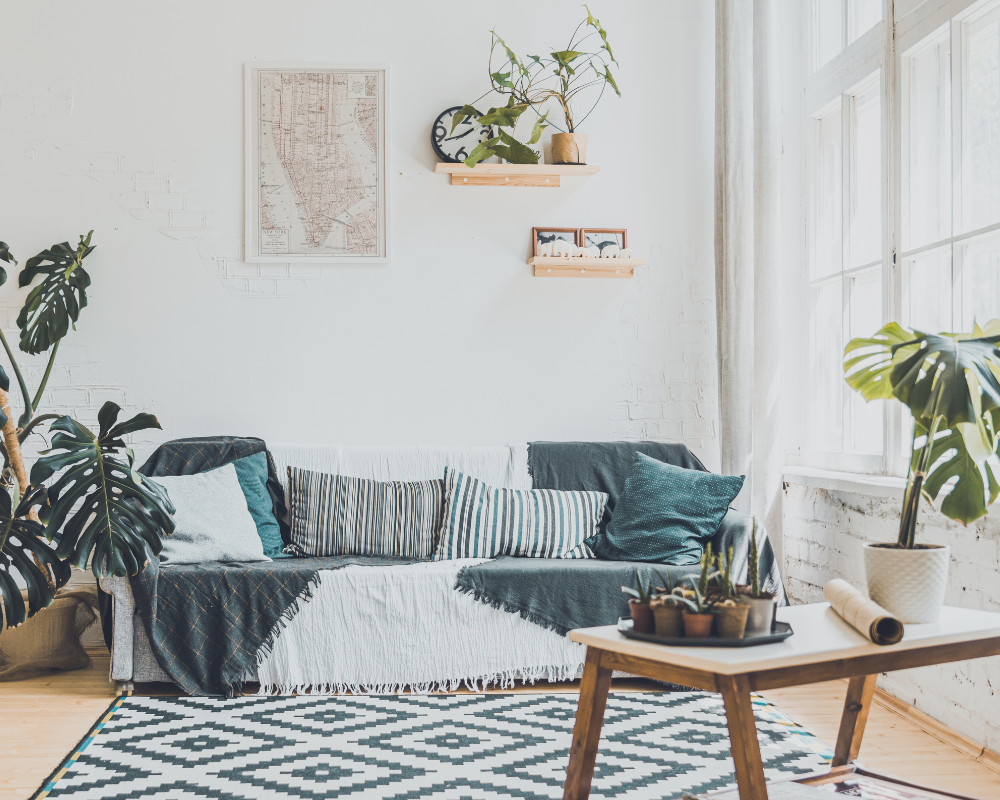
Each of us has a unique energetic field. Some people thrive in spaces full of activity and stimulation, while others need calm, grounded environments to fully feel at ease. Your home is part of that field, and it influences how you rest, create, and ultimately, find your true sense of self. Think about how you feel after organizing and clearing your space at home: you likely feel inspired, as you’re quite literally making space for something new. Now think about the times when your home is in disarray – you might feel restless, distracted, or even experience creative blocks.
How Does Your Environment Affect Your Energy?
- When your space feels off, your energy feels scattered.
- When your home is in order, your body innately feels at ease.
- The colors, textures, and flow of your rooms subtly impact your creativity and focus.
- Your personal design isn’t just visual – it’s a way to shape future outcomes.
In short, our environments can either drain or restore us. Learning how to pick up on this through the lens of your Human Design changes everything.
Your Home and Your Human Design
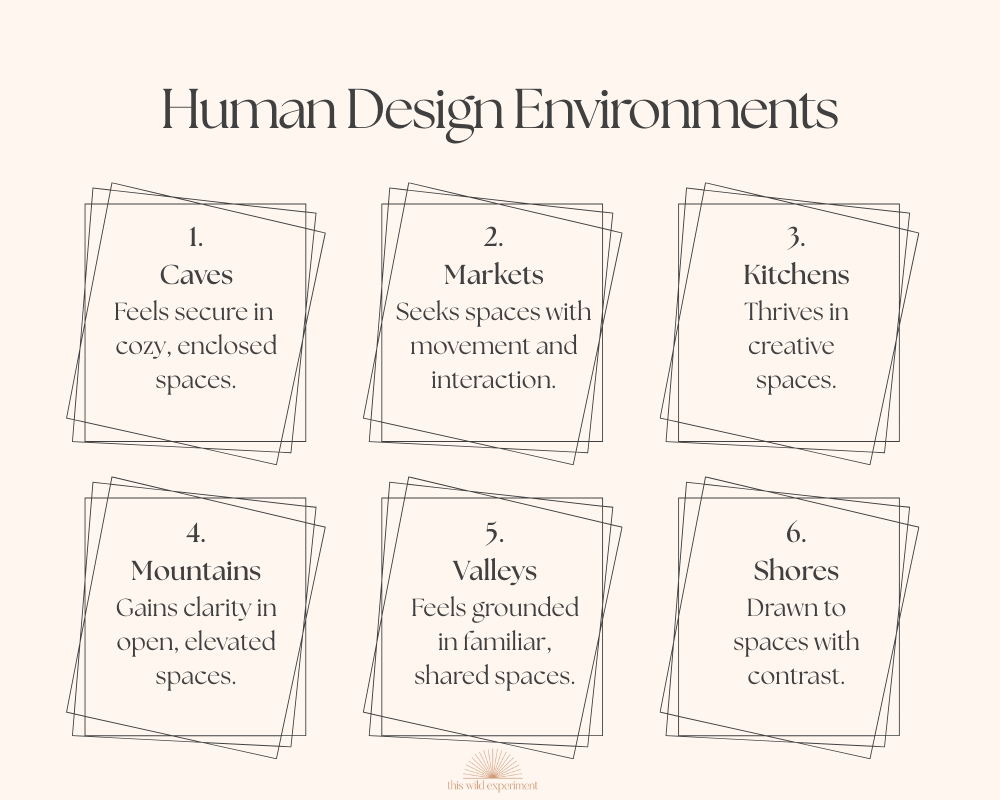
Human Design reminds us that there’s a constant exchange between our inner and outer worlds. While I’m a huge proponent of the idea that your inner world shapes your outer reality, I’d also argue that the quickest way to spark this transformation is to make supportive tweaks to the space you spend most of your time in. In your chart, there’s an aspect that focuses on your ideal environment type – even if you don’t know yours yet, you’ve probably felt it intuitively. It’s that sense of: it just feels good to be here.
A few examples of what that might mean:
- Caves Environment – Feels best in cozy, enclosed spaces with visibility of the door. This offers privacy and a sense of retreat.
- Markets Environment – Energized by movement, variety, and interaction. The hub where everything happens.
- Kitchens Environment – Thrives in creative, experimental spaces, where ideas (and meals) are made.
- Mountains Environment – Gains a deeper sense of clarity through elevation, openness, and a broader perspective.
- Valleys Environment – Feels grounded and connected in familiar, communicative spaces.
- Shores Environment – Draws inspiration from the space between. The transitions between city and nature, light and dark, busy and calm.
Which Environment do you feel most connected to? If you haven’t already, grab your chart to dig deeper.
Small Changes Are All You Need
The incredible thing about this discovery is that you don’t have to start knocking down walls or repainting your home. Ain’t nobody got time for that. Aligning with your Human Design Environment begins with awareness…that’s it. This is what will guide you in making those small intentional shifts when creating your ideal space.
To Get Started:
- Notice the energy of each room. Where do you feel most calm, creative, or drained?
- Focus on one area. Choose a single spot. This could be your desk or nightstand: clear, simplify, or add something that feels supportive. How do you feel after clearing the space? What do you choose to add?
- Pay attention to your senses. Are you in awe of light leaks in your home? Does the smell of fresh flowers bring up a favorite memory?
- Trust the process. Design is an experiment, and it’s always evolving. You and your space are meant to grow together.
This approach guides you to design in a way that’s tailored to you, not the latest trend. It’s timeless and honest.
A New Way to Think About Your Living Space
As I myself have entered into a new chapter of finding a home, I’m seeing firsthand how deeply connected our physical and energetic spaces are. I think about how I felt when I just ‘put things in their place’, and how I feel now that I am intentionally experimenting with Human Design. As I move through this discovery, I’m stepping away from the Pinterest boards and anchoring into the fact that our homes don’t have to look “perfect”. They just need to reflect who we are…and who we’re becoming.
What’s Next?
In future posts, I’ll explore how understanding Human Design can shape how you create and care for your home and the physical space around you. You can think of it as experimental home design with energetic awareness – as one person’s calm can be another person’s chaos, we want to cultivate spaces that don’t just look good or follow the current trend, but feel like you.
If you’re new here, get your chart to note your Human Design Profile, and start with my free one-page self-care guide: